
Last Updated: November 4, 2026
Overview
Tasks are the steps of a playbook. Each task does one job, such as running a command, checking a condition, formatting data or asking a person for input. Tasks are connected to the playbook's trigger node and to each other, and they run in that order. A task that is not connected to a trigger does not run.
The same task editor is used in preprocessing playbooks, investigation playbooks and codeless utility commands. For the triggers, see Playbook Triggers.
Task Types
The most common task types are on the bar at the bottom of the canvas. The ⋯ button at the end of the bar shows the rest.
-
Investigation playbooks: Command, Conditional, Data Formatter, Interaction and Stage on the bar; REST API, Ongoing Surveillance, Unwind, Merge, Lock, Unlock, Attack Path Discovery and AI Task under ⋯.
-
Preprocessing playbooks: Command, Conditional, Data Formatter, Escalate and Dismiss on the bar.
More task types in an investigation playbook
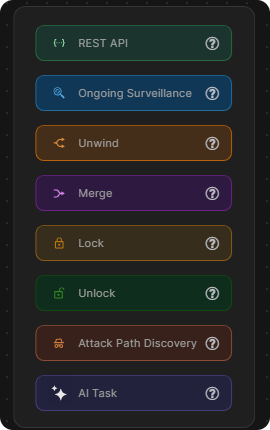
Each task type has its own article:
Adding a Task
-
Point to the node the new task should follow (the trigger node or a task), and select the + button on its right edge.
-
Select the kind of task, for example New Command Task.
The new task menu
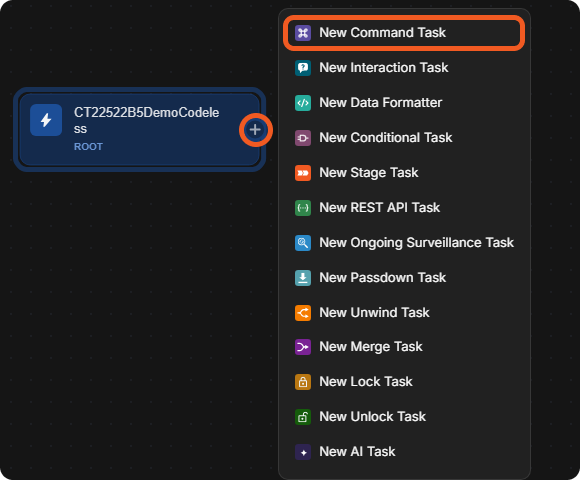
The task is added to the right of the node, connected to it with an arrow, and its settings open on the right.
Task Settings
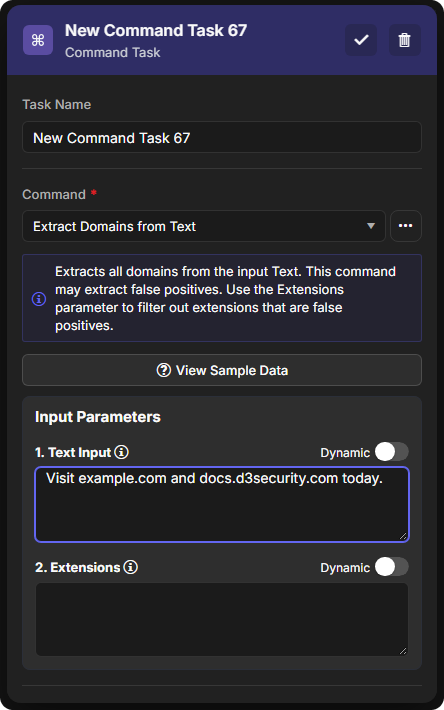
The settings depend on the task type. A command task, for example, has:
-
Task Name.
-
Command: the command the task runs, with its description. View Sample Data shows an example of what the command takes and returns.
-
Input Parameters: one field per command input. Switch on Dynamic to fill a field from data that earlier tasks produced instead of a fixed value. See Dynamically Selecting Data.
-
Run options such as Active and Auto Run, and the Run Mode. See Playbook Control Flow.
-
Description.
-
Error Handling Options, such as Stop on Error. See Stop on Error.
Select the check mark at the top of the settings to keep your changes, or the trash button to delete the task.
A command task's settings
Task Results
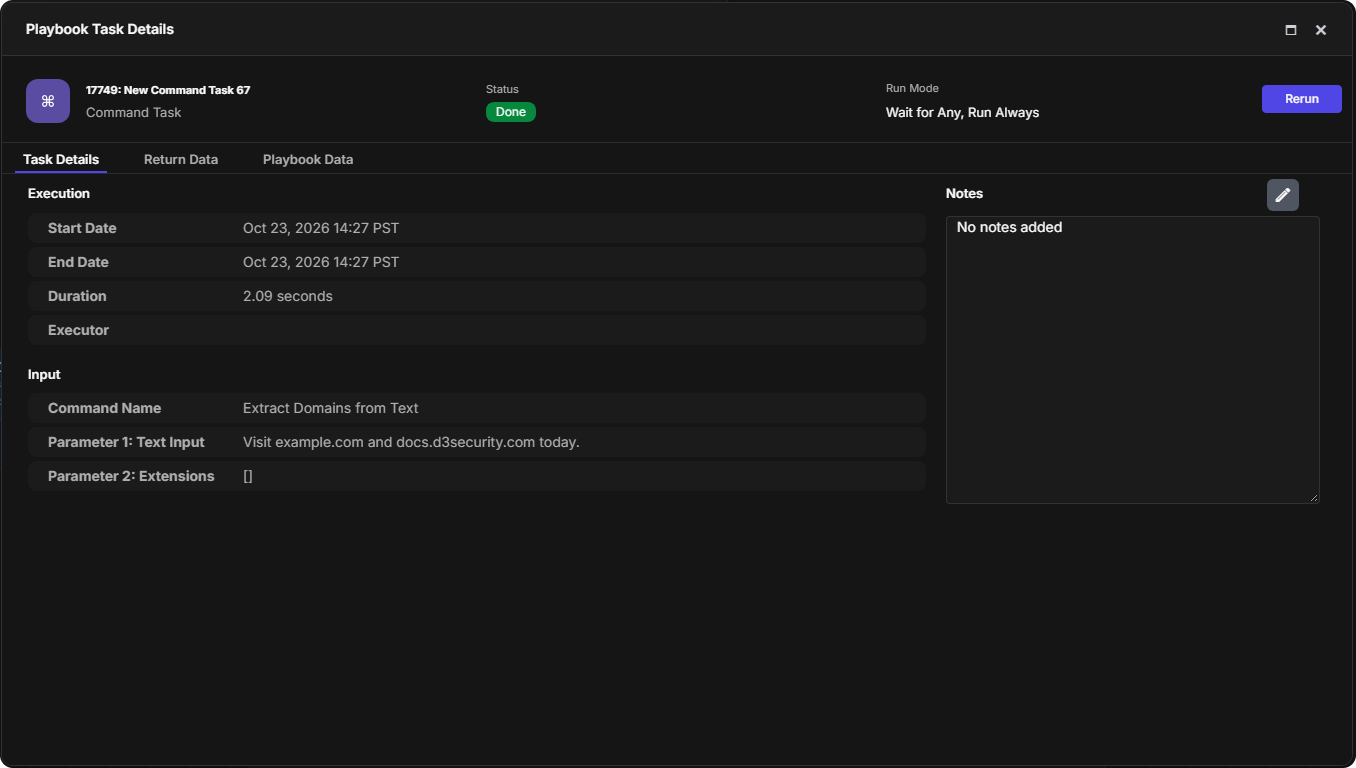
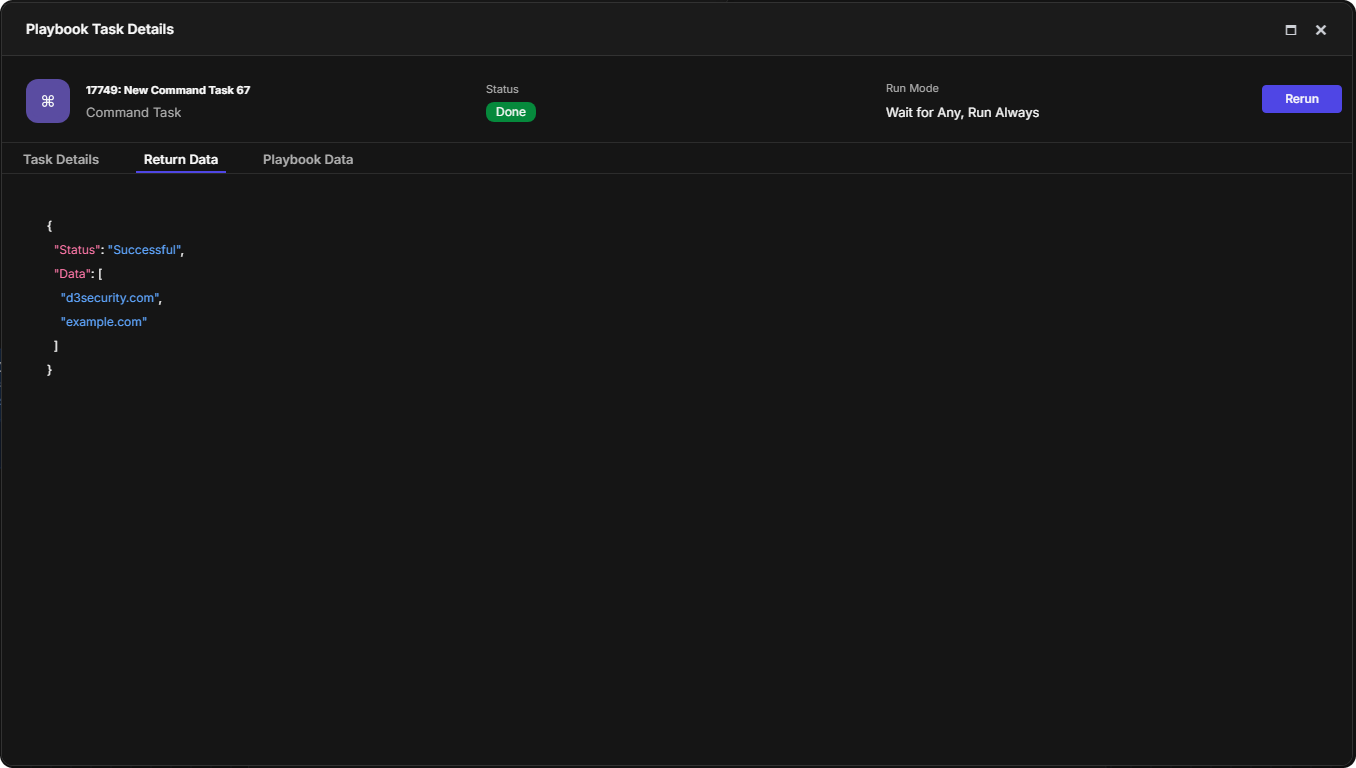
After a task runs, a status icon appears on its node. Select the icon to open Playbook Task Details. The header shows the task, its Status (for example Done) and its Run Mode.
-
Task Details: the Execution (Start Date, End Date, Duration) and the Input the task ran with. Notes holds comments about the task.
-
Return Data: what the task returned.
-
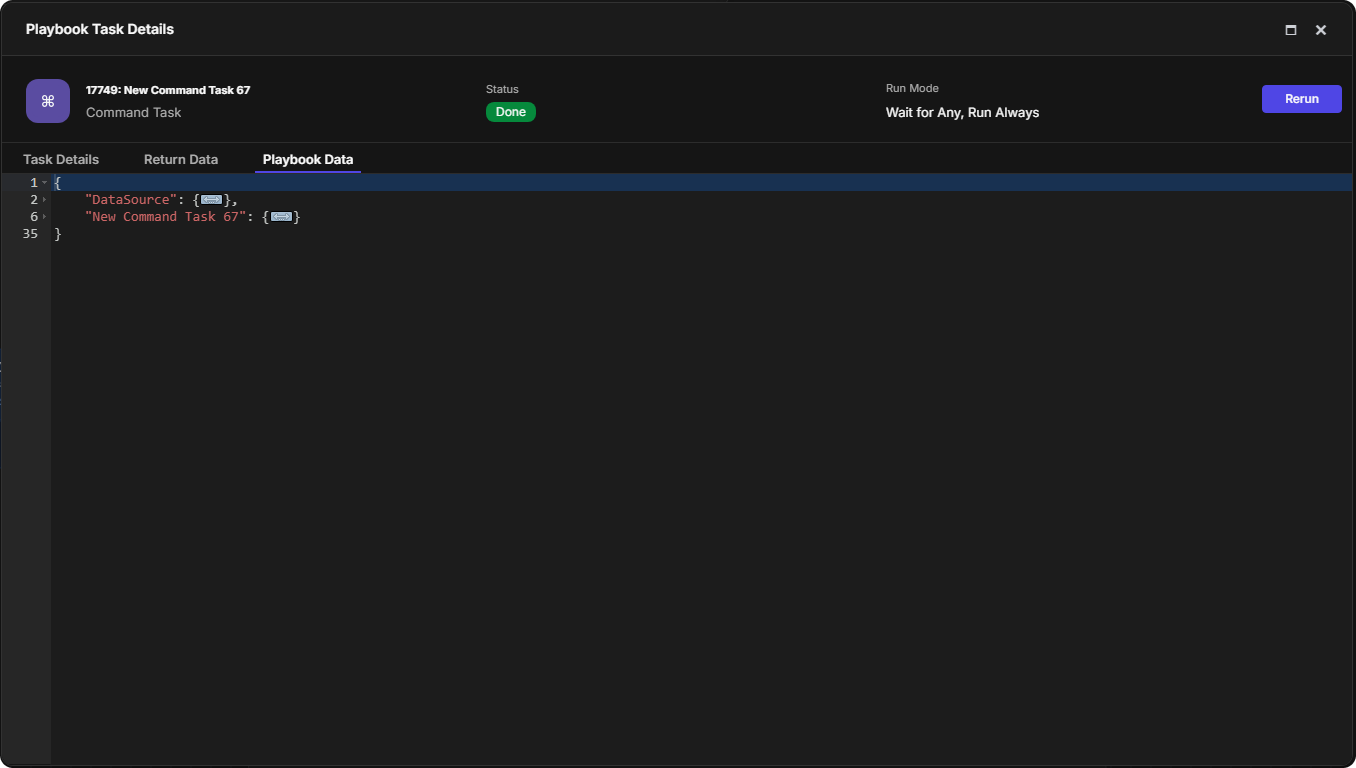
Playbook Data: the data collected by the playbook so far, by task.
Task Details
Return Data
Playbook Data
To run a task again, see Playbook Testing and Task Node Re-runs.
Running a Task by Hand
Tasks that wait for a person, and tasks that ended in an error, can be run from the incident. In the incident workspace, find the task in the Tasks panel, on the Assigned to Me or Assigned to Others tab, and select it to open Playbook Task Details.
-
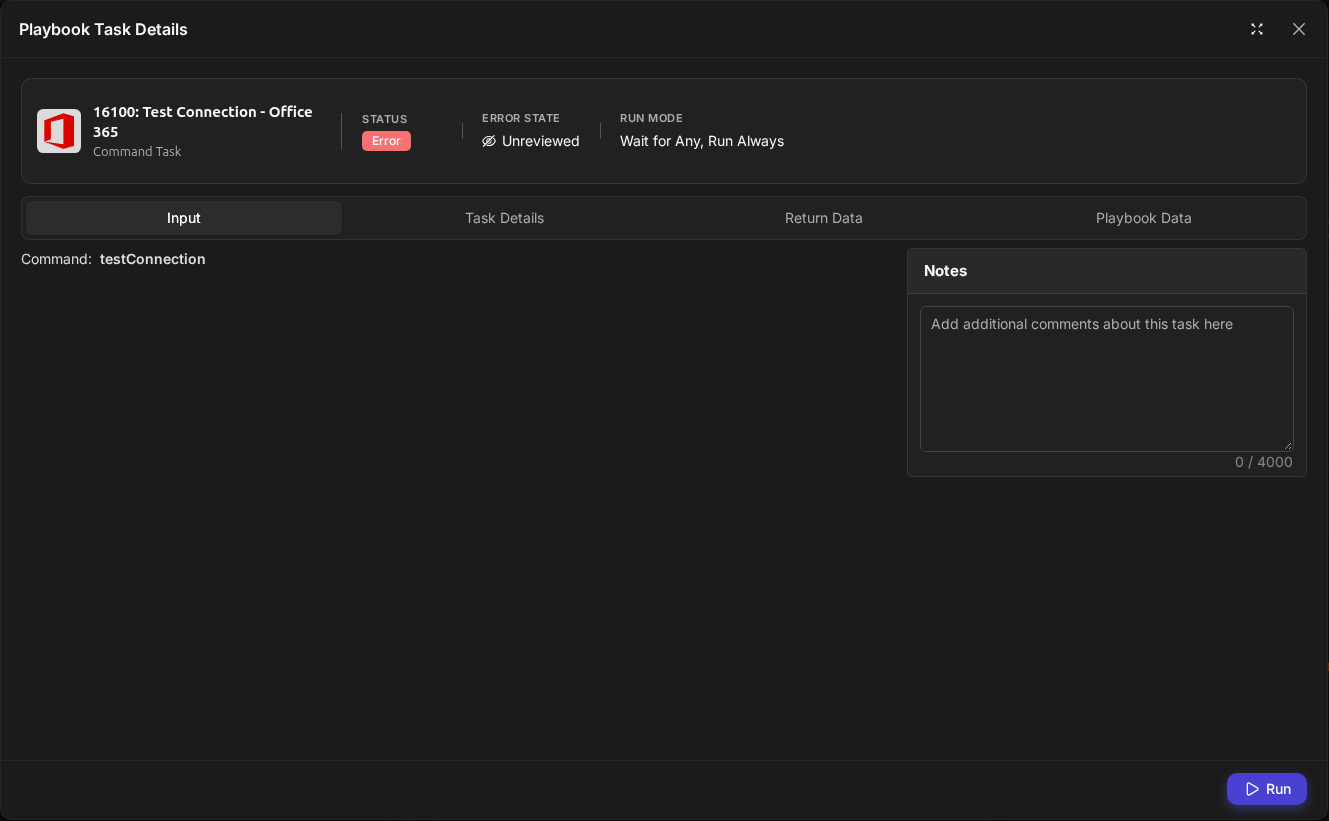
Fill in the task's inputs, if it has any. For a task with an Error status, select Rerun first; the dialog switches to the task's Input tab.
-
Select Run.
A task ready to run again
The dialog closes and a confirmation appears at the top right of the page, naming the task and the command it ran.
The confirmation after a rerun
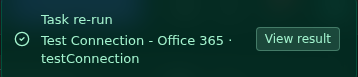
The confirmation's title tells you what kind of run you started:
-
Task started: the task has started but has not finished yet.
-
Task re-run: you ran the task again with Rerun.
Select View result on the confirmation to reopen the task on the run you just started. The list at the top of the dialog shows each run as a number and a status, such as Run 2 Queued, rerun of 1. While the run has not finished, the dialog shows its status and "No data to display." Open the task again once it has finished to see its Return Data.
A task reopened from View result while its run is queued

If a task fails after it has started, for example because an integration it uses is unavailable, the task shows an Error status in the task list. Open it to see the reason and to run it again.