
LAST UPDATED: Apr 11, 2025
Overview
Kayako Classic is a self-hosted service desk which is suited to ticketed workflows, IT support and service desk use cases.
D3 SOAR is providing REST operations to function with Kayako Classic.
Kayako Classic is available for use in:
Connection
To connect to Kayako Classic from D3 SOAR, please follow this part to collect the required information below:
|
Parameter |
Description |
Example |
|
Server URL |
The server URL of the Kayako Classic instance. |
https://kcdemo-classic.kayako.com/api/ |
|
API Key |
The REST API key obtained from the Kayako Classic admin portal. |
d7064*************************************bc4
|
|
API Secret |
The secret key obtained from the Kayako Classic admin portal. |
Njc*****************************************************************************************************************************************Tk5 |
Configuring Kayako Classic to Work with D3 SOAR
-
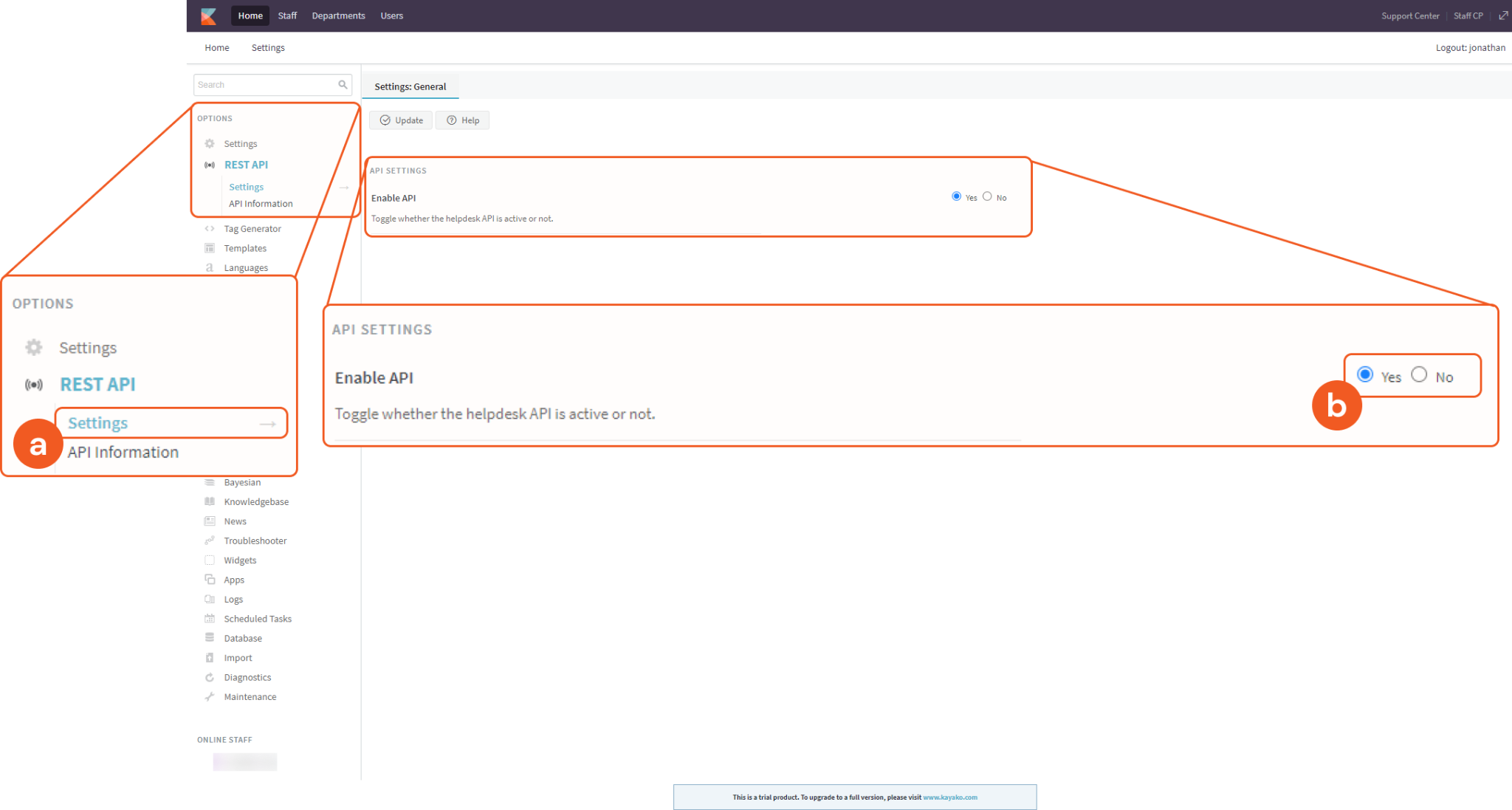
Log in to the Kayako Classic Admin console with your credentials. On the left sidebar menu, navigate to OPTIONS > REST API > Settings. On the API SETTINGS page, select Yes for Enable API. Click Update.
-
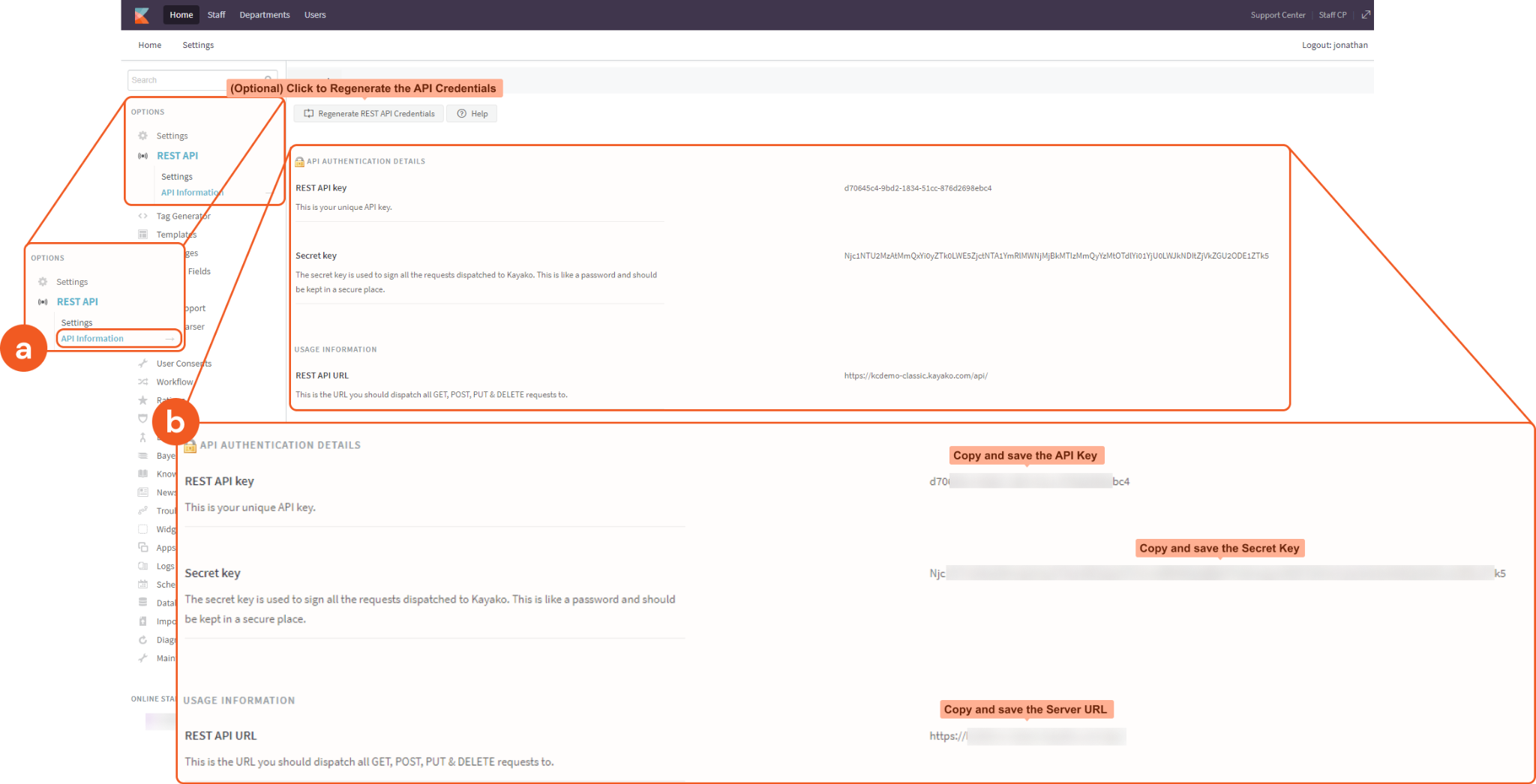
On the left sidebar menu, navigate to OPTIONS > REST API > API Information. You will be shown the REST API key, Secret Key and REST API URL* (server URL). Store the three values in a secure location, you will need them to build the integration connection in D3 SOAR (See step 3h of Configuring D3 SOAR to Work with Kayako Classic) Note: You can click Regenerate REST API Credentials to create a new API key and secret key.
READER NOTE
Please only copy and save the server URL up until /api/ as the input for the Server URL (domain level) parameter to build the connection in D3 SOAR. For example, if the REST API URL shown is https://kcdemo-classic.kayako.com/admin/api/, only https://kcdemo-classic.kayako.com/admin is required as the input for the Server URL (domain level) parameter when building the connection.
Configuring D3 SOAR to Work with Kayako Classic
-
Log in to D3 SOAR.
-
Find the Kayako Classic integration.
.png?cb=f47c5e612861ca1a1e16bd373c344f61)
-
Navigate to Configuration on the top header menu.
-
Click on the Integration icon on the left sidebar.
-
Type Kayako Classic in the search box to find the integration, then click it to select it.
-
Click + Connection, on the right side of the Connections section. A new connection window will appear.
-
-
Configure the following fields to create a connection to Kayako Classic.
.png?cb=a65574fd2b169343248a271578097979)
-
Connection Name: The desired name for the connection.
-
Site: Specifies the site to use the integration connection. Use the drop-down menu to select the site. The Share to Internal Sites option enables all sites defined as internal sites to use the connection. Selecting a specific site will only enable that site to use the connection.
-
Recipient site for events from connections Shared to Internal Sites: This field appears if you selected Share to Internal Sites for Site to let you select the internal site to deploy the integration connection.
-
Agent Name (Optional): Specifies the proxy agent required to build the connection. Use the dropdown menu to select the proxy agent from a list of previously configured proxy agents.
-
Description (Optional): Add your desired description for the connection.
-
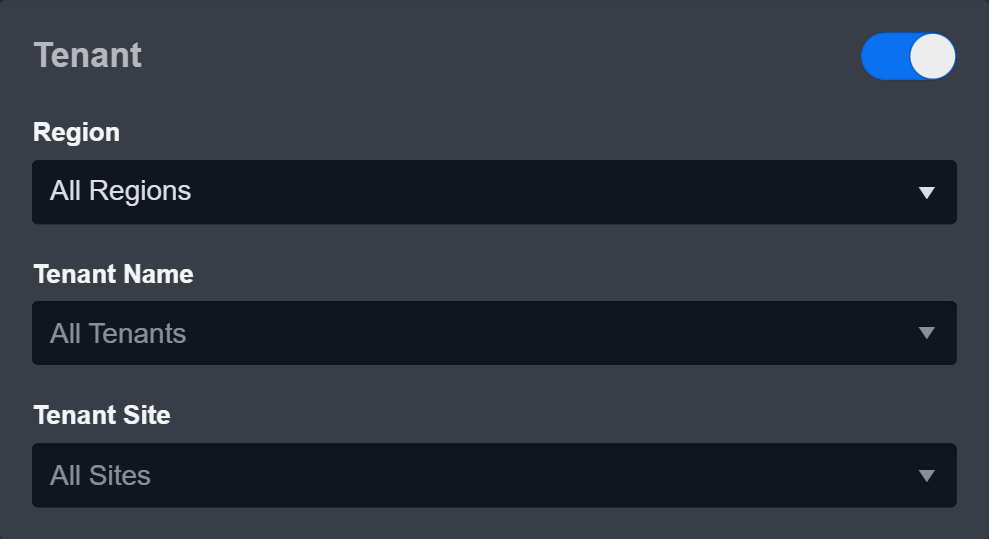
Tenant (Optional): When configuring the connection from a master tenant site, you have the option to choose the specific tenant sites you want to share the connection with. Once you enable this setting, you can filter and select the desired tenant sites from the dropdowns to share the connection.
-
Configure User Permissions: Defines which users have access to the connection.
-
Active: Check the tick box to ensure the connection is available for use.
.png?cb=ed039361cf67de48c8375094e0dd06d0)
-
System: This section contains the parameters defined specifically for the integration. These parameters must be configured to create the integration connection.
See step 2 of Configuring Kayako Classic to Work with D3 SOAR for instructions on obtaining the input values.
1. Input the Kayako Classic Server URL.
2. Input your saved API Key.
3. Input your saved API Secret. -
Connection Health Check: Updates the connection status you have created. A connection health check is done by scheduling the Test Connection command of this integration. This can only be done when the connection is active.
To set up a connection health check, check the Connection Health Check tickbox. You can customize the interval (minutes) for scheduling the health check. An email notification can be set up after a specified number of failed connection attempts. -
Enable Password Vault: An optional feature that allows users to take the stored credentials from their own password vault. Please refer to the password vault connection guide if needed.
-
-
Test the connection.
.png?cb=14f1481c7f16f2fe23cfa8f79505079c)
-
Click Test Connection to verify the account credentials and network connection. If the Test Connection Passed alert window appears, the test connection is successful. You will see Passed with a green checkmark appear beside the Test Connection button. If the test connection fails, please check your connection parameters and try again.
-
Click OK to close the alert window.
-
Click + Add to create and add the configured connection.
-
Commands
Kayako Classic includes the following executable commands for users to set up schedules or create playbook workflows. With the Test Command, you can execute these commands independently for playbook troubleshooting.
Integration API Note
For more information about the Kayako Classic API, please refer to the Kayako Classic API reference.
Create Ticket
Creates a new ticket.
READER NOTE
-
Department ID are required parameters to run this command.
-
Run the List Departments command to obtain Department IDs.
-
-
User ID, Staff ID and Ownerstaff ID are optional parameters to run this command.
-
Run the List Users command to obtain User IDs.
-
Run the List Staff command to obtain Staff IDs or Ownerstaff IDs.
-
When the defined value of the Autouser ID parameter is “1”, only one of the User ID or the Staff ID parameters requires an input. You cannot define both parameters.
-
The Ownerstaff ID parameter can only be defined when the Staff ID parameter is not defined.
-
-
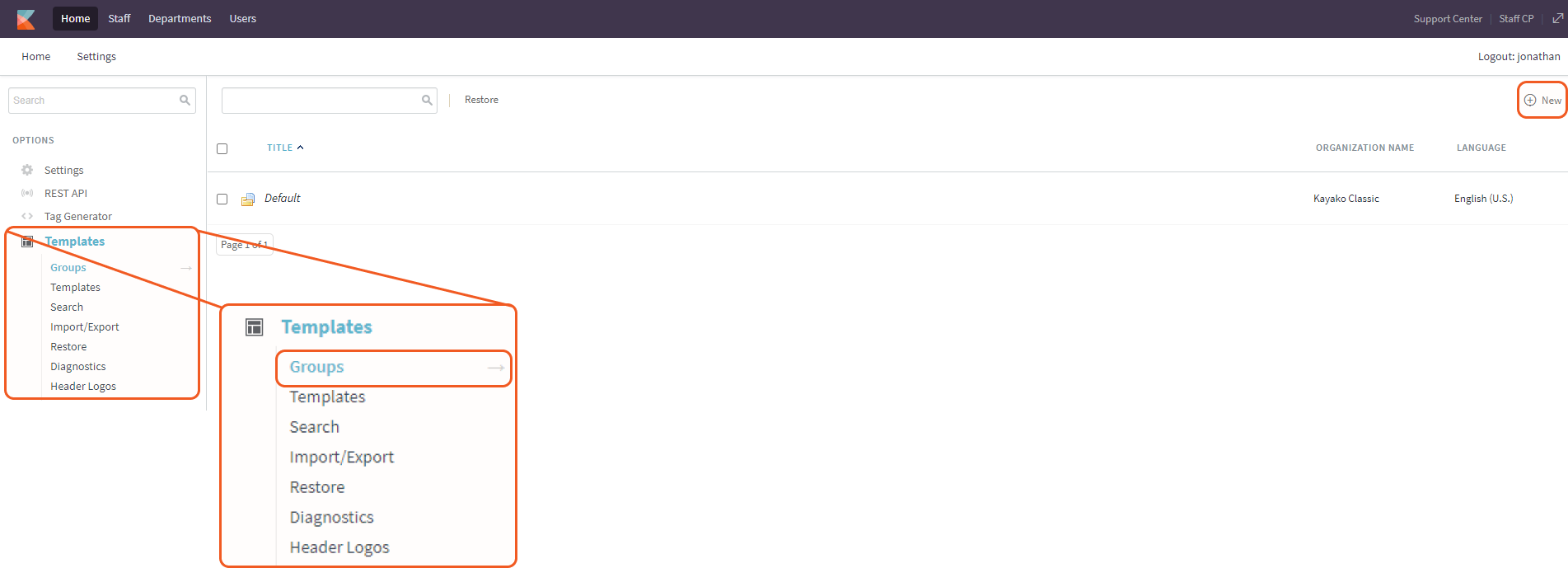
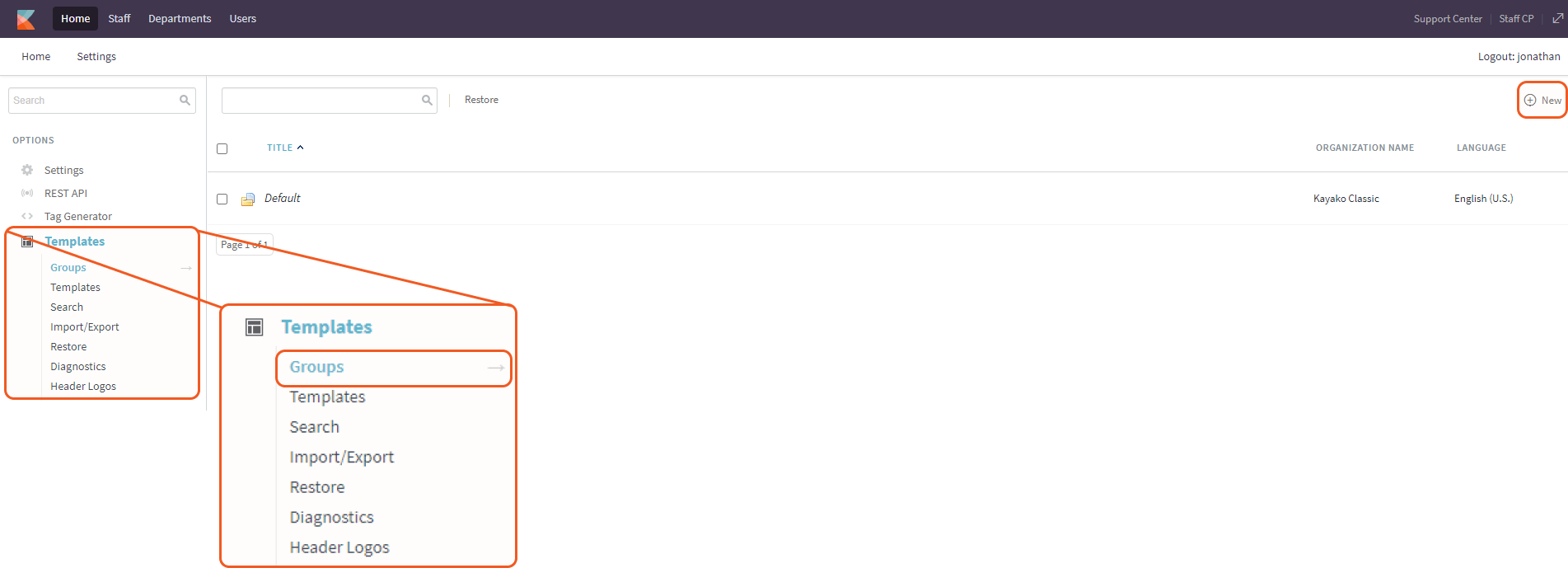
Template Group is an optional parameter to run this command. It can be added from the Kayako Classic user interface. On the left sidebar menu, navigate to OPTIONS > Templates > Groups, then click + New.
Input
|
Input Parameter |
Required/Optional |
Description |
Example |
|
Subject |
Required |
The subject of the ticket. |
test1201c |
|
Fullname |
Required |
The full name of the ticket creator. |
jon |
|
|
Required |
The email address of the ticket creator. |
test@example.com |
|
Contents |
Required |
The contents of the first ticket post. |
content test1201 |
|
Department ID |
Required |
The ID of the department to assign the ticket to. Department IDs can be obtained using the List Departments command. |
33 |
|
Ticket Status |
Required |
The status of the ticket. The available ticket statuses are NEW(NOUVEAU), IN PROGRESS, CLOSED, WAITING FOR CUSTOMER, READY TO DELIVER, and DELIVERED. |
WAITING FOR CUSTOMER |
|
Ticket Priority |
Required |
The priority of the ticket. The available ticket priorities are BLOCKING(BLOQUANT), MAJOR(Majeur) and MINOR(Mineur). |
Major(Majeur) |
|
Ticket Type |
Required |
The ticket type to assign. The available ticket types are Assistance, Topic, Maintenance, Issue and Follow Up. |
Issue |
|
Autouser ID |
Optional |
If you select “1”, the option to auto select the ticket creator’s user ID based on the input email address will be enabled. If no email address is found, a new user will be created based on the input email address. If you select “0”, you must define at least one of the User ID or Staff ID parameters. The default option is “0”. |
1 |
|
User ID |
Optional |
The user ID of the ticket creator when “0” is selected for the Autouser ID parameter. User IDs can be obtained using the List Users command. Note: Only one of the User ID or Staff ID parameters can be defined. |
123 |
|
Staff ID |
Optional |
The staff ID of the ticket creator when “0” is selected for the Autouser ID parameter. Staff IDs can be obtained using the List Staff command. Note: Only one of the User ID or Staff ID parameters can be defined. |
234 |
|
Ownerstaff ID |
Optional |
The ID of the ticket’s owner. Ownerstaff IDs can be obtained using the List Staff command. Note: You can only define this ticket if the Staff ID parameter is not defined. |
123
|
|
Ticket Creation Type |
Optional |
The ticket creation type (Default or Phone). The default option is Default. |
Phone |
|
Template Group |
Optional |
The ID or name of the custom template group to associate the ticket with. Template group names can be obtained on the Kayako Classic user interface. On the left sidebar menu, navigate to OPTIONS > Templates > Groups, then click + New. The default template group is used by default. Note: This parameter is only available from version 4.40.954 of Kayako Classic and onwards. |
Default |
|
Ignore Auto Responder |
Optional |
The option to disable an auto responder email, if set to Yes. The default option is No. Note: This parameter is only available from version 4.40.1079 of Kayako Classic and onwards. |
No |
|
Email Queue ID |
Optional |
The option to select an email queue ID. Email queue IDs can be obtained on the Kayako Classic user interface. On the left sidebar menu, navigate to OPTIONS > Email Parser > Email Queues. Note: This parameter is only available from version 4.70 of Kayako Classic and onwards. |
10 |
Output
Error Handling
If the Return Data is Failed, an Error tab will appear in the Test Result window.
The error tab contains the details responded from D3 SOAR or third-party API calls, including Failure Indicator, Status Code, and Message. This can help you locate the root cause of a command failure.
|
Parts in Error |
Description |
Example |
|
Failure Indicator |
Indicates the command failure that happened at a specific input and/or API call. |
Create Ticket failed. |
|
Status Code |
The response code issued by the third-party API server or the D3 SOAR system that can be used to locate the corresponding error category. For example, if the returned status code is 401, the selected connection is unauthorized to run the command. The user or system support would need to check the permission setting in the Kayako Classic portal. Refer to the HTTP Status Code Registry for details. |
Status Code: 404. |
|
Message |
The raw data or captured key error message from the integration API server about the API request failure. |
Message: User ID Not Found. |
|
Error Sample Data Create Ticket failed. Status Code: 404. Message: User ID Not Found. |
Create Ticket Time Track Note
Adds a new time tracking note to a ticket.
READER NOTE
Ticket ID and Staff ID are required parameters to run this command.
-
Run the List Tickets command to obtain Ticket IDs.
-
Run the List Staff command to obtain Staff IDs.
Worker Staff IDs is an optional parameter to run this command.
-
Run the List Staff command to obtain Worker Staff IDs.
Input
|
Input Parameter |
Required/Optional |
Description |
Example |
|
Ticket ID |
Required |
The ID of the ticket to add a time tracking note. Ticket IDs can be obtained using the List Tickets command. |
5*** |
|
Contents |
Required |
The contents of the time tracking note. |
Time track comment on 20221130 evening |
|
Staff ID |
Required |
The staff ID of the time tracking note’s creator. Staff IDs can be obtained using the List Staff command. |
153
|
|
Work Time |
Required |
The timestamp of when the work item was executed. |
2022-11-28 00:00 |
|
Bill Time |
Required |
The timestamp of when to bill the use. |
2022-11-29 00:00 |
|
Time Spent |
Required |
The amount of time spent on the ticket (in seconds). |
3600 |
|
Time Billable |
Required |
The amount of billable time (in seconds). |
1800 |
|
Worker Staff ID |
Optional |
The ID of the worker creating the entry. If this parameter is not defined, the ID of the staff user creating this entry will be used by default. Worker Staff IDs can be obtained using the List Staff command. |
123 |
|
Note Color |
Optional |
The color of the time tracking note on the Kayako Classic user interface. The available note colors are Yellow, Purple, Blue, Green and Red. If this parameter is not defined, the default note color will be Yellow. |
Green |
Output
Error Handling
If the Return Data is Failed, an Error tab will appear in the Test Result window.
The error tab contains the details responded from D3 SOAR or third-party API calls, including Failure Indicator, Status Code, and Message. This can help you locate the root cause of a command failure.
|
Parts in Error |
Description |
Example |
|
Failure Indicator |
Indicates the command failure that happened at a specific input and/or API call. |
Create Ticket Time Track Note failed. |
|
Status Code |
The response code issued by the third-party API server or the D3 SOAR system that can be used to locate the corresponding error category. For example, if the returned status code is 401, the selected connection is unauthorized to run the command. The user or system support would need to check the permission setting in the Kayako Classic portal. Refer to the HTTP Status Code Registry for details. |
Status Code: 404. |
|
Message |
The raw data or captured key error message from the integration API server about the API request failure. |
Message: Ticket ID Not Found. |
|
Error Sample Data Create Ticket Time Track Note failed. Status Code: 404. Message: Ticket ID Not Found. |
Delete Ticket Time Track Note
Deletes the ticket time tracking note identified by Time Track ID linked to the Ticket ID.
READER NOTE
Ticket ID and Time Track ID are required parameters to run this command.
-
Run the List Tickets command to obtain Ticket IDs.
-
Run the Get Ticket Time Track Notes List command to obtain Time Track IDs. The Time Track IDs can be found in the returned raw data, at the path return$.timetrack.[*].id.
-
It is suggested to run the List Tickets command first to get your desired ticket ID first, then the ID to run the Get Ticket Time Track Notes List command. Finally, use the obtained Ticket ID and Time Track ID to run the Delete Ticket Time Track Note command.
Input
|
Input Parameter |
Required/Optional |
Description |
Example |
|
Ticket ID |
Required |
The ID of the ticket linked to the time tracking note to delete. Ticket IDs can be obtained using the List Tickets command. |
5*** |
|
Time Track ID |
Required |
The ID of the ticket time tracking note to delete. Time Track IDs can be obtained using the Get Ticket Time Track Notes List command. |
10 |
Output
Error Handling
If the Return Data is Failed, an Error tab will appear in the Test Result window.
The error tab contains the details responded from D3 SOAR or third-party API calls, including Failure Indicator, Status Code, and Message. This can help you locate the root cause of a command failure.
|
Parts in Error |
Description |
Example |
|
Failure Indicator |
Indicates the command failure that happened at a specific input and/or API call. |
Delete Ticket Time Track Note failed. |
|
Status Code |
The response code issued by the third-party API server or the D3 SOAR system that can be used to locate the corresponding error category. For example, if the returned status code is 401, the selected connection is unauthorized to run the command. The user or system support would need to check the permission setting in the Kayako Classic portal. Refer to the HTTP Status Code Registry for details. |
Status Code: 404. |
|
Message |
The raw data or captured key error message from the integration API server about the API request failure. |
Message: Ticket ID Not Found. |
|
Error Sample Data Delete Ticket Time Track Note failed. Status Code: 404. Message: Ticket ID Not Found. |
Get Ticket
Retrieves the ticket identified by ticket ID.
READER NOTE
Ticket ID is a required parameter to run this command.
-
Run the List Tickets command to obtain Ticket IDs.
Input
|
Input Parameter |
Required/Optional |
Description |
Example |
|
Ticket ID |
Required |
The ID of the ticket to retrieve. Ticket IDs can be obtained using the List Tickets command. |
5***** |
Output
Error Handling
If the Return Data is Failed, an Error tab will appear in the Test Result window.
The error tab contains the details responded from D3 SOAR or third-party API calls, including Failure Indicator, Status Code, and Message. This can help you locate the root cause of a command failure.
|
Parts in Error |
Description |
Example |
|
Failure Indicator |
Indicates the command failure that happened at a specific input and/or API call. |
Get Ticket failed. |
|
Status Code |
The response code issued by the third-party API server or the D3 SOAR system that can be used to locate the corresponding error category. For example, if the returned status code is 401, the selected connection is unauthorized to run the command. The user or system support would need to check the permission setting in the Kayako Classic portal. Refer to the HTTP Status Code Registry for details. |
Status Code: 404. |
|
Message |
The raw data or captured key error message from the integration API server about the API request failure. |
Message: Ticket ID Not Found. |
|
Error Sample Data Get Ticket failed. Status Code: 404. Message: Ticket ID Not Found. |
Get Ticket Custom Fields
Retrieve a list of the specified ticket's custom fields.
READER NOTE
Ticket ID is a required parameter to run this command.
-
Run the List Tickets command to obtain Ticket IDs.
Input
|
Input Parameter |
Required/Optional |
Description |
Example |
|
Ticket ID |
Required |
The ID of the ticket to return its corresponding custom fields from. Ticket IDs can be obtained using the List Tickets command. |
5*** |
Output
Error Handling
If the Return Data is Failed, an Error tab will appear in the Test Result window.
The error tab contains the details responded from D3 SOAR or third-party API calls, including Failure Indicator, Status Code, and Message. This can help you locate the root cause of a command failure.
|
Parts in Error |
Description |
Example |
|
Failure Indicator |
Indicates the command failure that happened at a specific input and/or API call. |
Get Ticket Custom Fields failed. |
|
Status Code |
The response code issued by the third-party API server or the D3 SOAR system that can be used to locate the corresponding error category. For example, if the returned status code is 401, the selected connection is unauthorized to run the command. The user or system support would need to check the permission setting in the Kayako Classic portal. Refer to the HTTP Status Code Registry for details. |
Status Code: 404. |
|
Message |
The raw data or captured key error message from the integration API server about the API request failure. |
Message: Ticket ID Not Found. |
|
Error Sample Data Get Ticket Custom Fields failed. Status Code: 404. Message: Ticket ID Not Found. |
Get Ticket Time Track Note
Retrieves the time tracking note identified by Time Track ID that belongs to a ticket identified by Ticket ID.
READER NOTE
Ticket ID and Time Track ID are required parameters to run this command.
-
Run the List Tickets command to obtain Ticket IDs.
-
Run the Get Ticket Time Track Notes List command to obtain Time Track IDs. The Time Track IDs can be found in the returned raw data, at the path return$.timetrack.[*].id.
-
It is suggested to run the List Tickets command first to get your desired ticket ID first, then the ID to run the Get Ticket Time Track Notes List command. Finally, use the obtained Ticket ID and Time Track ID to run the Get Ticket Time Track Note command.
Input
|
Input Parameter |
Required/Optional |
Description |
Example |
|
Ticket ID |
Required |
The ID of the ticket to retrieve its corresponding time tracking note from. Ticket IDs can be obtained using the List Tickets command. |
5*** |
|
Time Track ID |
Required |
The ID of the time tracking note to retrieve. Time Track IDs can be obtained using the Get Ticket Time Track Notes List command. |
10
|
Output
Error Handling
If the Return Data is Failed, an Error tab will appear in the Test Result window.
The error tab contains the details responded from D3 SOAR or third-party API calls, including Failure Indicator, Status Code, and Message. This can help you locate the root cause of a command failure.
|
Parts in Error |
Description |
Example |
|
Failure Indicator |
Indicates the command failure that happened at a specific input and/or API call. |
Get Ticket Time Track Note failed. |
|
Status Code |
The response code issued by the third-party API server or the D3 SOAR system that can be used to locate the corresponding error category. For example, if the returned status code is 401, the selected connection is unauthorized to run the command. The user or system support would need to check the permission setting in the Kayako Classic portal. Refer to the HTTP Status Code Registry for details. |
Status Code: 404. |
|
Message |
The raw data or captured key error message from the integration API server about the API request failure. |
Message: Ticket ID Not Found. |
|
Error Sample Data Get Ticket Time Track Note failed. Status Code: 404. Message: Ticket ID Not Found. |
Get Ticket Time Track Notes List
Retrieves a list of a ticket's time track notes.
READER NOTE
Ticket ID is a required parameter to run this command.
-
Run the List Tickets command to obtain Ticket IDs.
Input
|
Input Parameter |
Required/Optional |
Description |
Example |
|
Ticket ID |
Required |
The ID of the ticket to retrieve its corresponding time tracking notes from. Ticket IDs can be obtained using the List Tickets command. |
5***
|
Output
Error Handling
If the Return Data is Failed, an Error tab will appear in the Test Result window.
The error tab contains the details responded from D3 SOAR or third-party API calls, including Failure Indicator, Status Code, and Message. This can help you locate the root cause of a command failure.
|
Parts in Error |
Description |
Example |
|
Failure Indicator |
Indicates the command failure that happened at a specific input and/or API call. |
Get Ticket Time Track Notes List failed. |
|
Status Code |
The response code issued by the third-party API server or the D3 SOAR system that can be used to locate the corresponding error category. For example, if the returned status code is 401, the selected connection is unauthorized to run the command. The user or system support would need to check the permission setting in the Kayako Classic portal. Refer to the HTTP Status Code Registry for details. |
Status Code: 404. |
|
Message |
The raw data or captured key error message from the integration API server about the API request failure. |
Message: Ticket ID Not Found. |
|
Error Sample Data Get Ticket Time Track Notes List failed. Status Code: 404. Message: Ticket ID Not Found. |
List Departments
Retrieve a list of all departments and sub-departments in the help desk.
Input
N/A
Output
Error Handling
If the Return Data is Failed, an Error tab will appear in the Test Result window.
The error tab contains the details responded from D3 SOAR or third-party API calls, including Failure Indicator, Status Code, and Message. This can help you locate the root cause of a command failure.
|
Parts in Error |
Description |
Example |
|
Failure Indicator |
Indicates the command failure that happened at a specific input and/or API call. |
List Departments failed. |
|
Status Code |
The response code issued by the third-party API server or the D3 SOAR system that can be used to locate the corresponding error category. For example, if the returned status code is 401, the selected connection is unauthorized to run the command. The user or system support would need to check the permission setting in the Kayako Classic portal. Refer to the HTTP Status Code Registry for details. |
Status Code: 403. |
|
Message |
The raw data or captured key error message from the integration API server about the API request failure. |
Message: An existing connection was forcibly closed by the remote host. |
|
Error Sample Data List Departments failed. Status Code: 403. Message: An existing connection was forcibly closed by the remote host. |
List Staff
Retrieves a list of all staff users in the help desk.
Input
N/A
Output
Error Handling
If the Return Data is Failed, an Error tab will appear in the Test Result window.
The error tab contains the details responded from D3 SOAR or third-party API calls, including Failure Indicator, Status Code, and Message. This can help you locate the root cause of a command failure.
|
Parts in Error |
Description |
Example |
|
Failure Indicator |
Indicates the command failure that happened at a specific input and/or API call. |
List Staff failed. |
|
Status Code |
The response code issued by the third-party API server or the D3 SOAR system that can be used to locate the corresponding error category. For example, if the returned status code is 401, the selected connection is unauthorized to run the command. The user or system support would need to check the permission setting in the Kayako Classic portal. Refer to the HTTP Status Code Registry for details. |
Status Code: 403. |
|
Message |
The raw data or captured key error message from the integration API server about the API request failure. |
Message: An existing connection was forcibly closed by the remote host. |
|
Error Sample Data List Staff failed. Status Code: 403. Message: An existing connection was forcibly closed by the remote host. |
List Tickets
Retrieves a filtered list of tickets from the help desk. The returned tickets are ordered by Ticket ID in descending order.
READER NOTE
The input parameter Department IDs is required to run this command.
-
Run the List Departments command to obtain Department IDs.
Owner Staff IDs and User IDs are optional parameters to run this command.
-
Run the List Staff command to obtain Owner Staff IDs.
-
Run the List Users command to obtain the User IDs.
Input
|
Input Parameter |
Required/Optional |
Description |
Example |
|
Department IDs |
Required |
A comma-separated list of ID(s) of the department(s) to filter tickets. Department IDs can be obtained using the List Departments command. |
[ 2, 3 ] |
|
Ticket Status |
Optional |
The ticket status to filter returned tickets. If this parameter is not defined, tickets of all statuses will be returned. |
NEW(NOUVEAU) |
|
Owner Staff IDs |
Optional |
A comma-separated list of ID(s) of the ticket owner(s) to filter tickets. Owner Staff IDs can be obtained using the List Staff command. |
[ 100, 70 ] |
|
User IDs |
Optional |
A comma-separated list of ID(s) of the user(s) to filter tickets. User IDs can be obtained using the List Users command. |
[ 123 ] |
Output
Error Handling
If the Return Data is Failed, an Error tab will appear in the Test Result window.
The error tab contains the details responded from D3 SOAR or third-party API calls, including Failure Indicator, Status Code, and Message. This can help you locate the root cause of a command failure.
|
Parts in Error |
Description |
Example |
|
Failure Indicator |
Indicates the command failure that happened at a specific input and/or API call. |
List Tickets failed. |
|
Status Code |
The response code issued by the third-party API server or the D3 SOAR system that can be used to locate the corresponding error category. For example, if the returned status code is 401, the selected connection is unauthorized to run the command. The user or system support would need to check the permission setting in the Kayako Classic portal. Refer to the HTTP Status Code Registry for details. |
Status Code: 404. |
|
Message |
The raw data or captured key error message from the integration API server about the API request failure. |
Message: User ID Not Found. |
|
Error Sample Data List Tickets failed. Status Code: 404. Message: User ID Not Found. |
List Users
Retrieves a list of all users in the help desk starting from a marker (user ID) until the specified fetch limit is reached (1,000 by default).
READER NOTE
If no input parameters are defined, all users will be returned.
Input
|
Input Parameter |
Required/Optional |
Description |
Example |
|
Marker User ID |
Optional |
The ID of the marker user. User IDs with values greater than the marker user ID will be returned, subject to the defined Limit value. For example, if the defined Marker User ID is 100, user IDs with values greater than 100 will be returned. |
100 |
|
Limit |
Optional |
The maximum number of users to return. |
2 |
Output
Error Handling
If the Return Data is Failed, an Error tab will appear in the Test Result window.
The error tab contains the details responded from D3 SOAR or third-party API calls, including Failure Indicator, Status Code, and Message. This can help you locate the root cause of a command failure.
|
Parts in Error |
Description |
Example |
|
Failure Indicator |
Indicates the command failure that happened at a specific input and/or API call. |
List Users failed. |
|
Status Code |
The response code issued by the third-party API server or the D3 SOAR system that can be used to locate the corresponding error category. For example, if the returned status code is 401, the selected connection is unauthorized to run the command. The user or system support would need to check the permission setting in the Kayako Classic portal. Refer to the HTTP Status Code Registry for details. |
Status Code: 403. |
|
Message |
The raw data or captured key error message from the integration API server about the API request failure. |
Message: An existing connection was forcibly closed by the remote host. |
|
Error Sample Data List Users failed. Status Code: 403. Message: An existing connection was forcibly closed by the remote host. |
Update Ticket
Updates the specified ticket.
READER NOTE
-
Ticket ID is a required parameter to run this command
-
Run the List Tickets command to obtain Ticket IDs
-
-
Department ID, Owner Staff ID and User ID are optional parameters to run this command.
-
Run the List Departments command to obtain Department IDs.
-
Run the List Staff command to obtain Staff IDs or Ownerstaff IDs.
-
Run the List Users command to obtain User IDs.
-
-
Template Group is an optional parameter to run this command. It can be added from the Kayako Classic user interface. On the left sidebar menu, navigate to OPTIONS > Templates > Groups, then click + New.
Input
|
Input Parameter |
Required/Optional |
Description |
Example |
|
Ticket ID |
Required |
The ID of the ticket to update. Ticket IDs can be obtained using the List Tickets command. |
5*** |
|
Subject |
Optional |
The updated subject of the ticket. |
test1130NEW |
|
Fullname |
Optional |
The updated full name of the ticket creator. |
test |
|
|
Optional |
The updated email address of the ticket creator. |
test@example.com |
|
Department ID |
Optional |
The updated department ID to associate the ticket with. Department IDs can be obtained using the List Departments command. |
20 |
|
Ticket Status |
Optional |
The updated status of the ticket. The available ticket statuses are NEW(NOUVEAU), IN PROGRESS, CLOSED, WAITING FOR CUSTOMER, READY TO DELIVER, and DELIVERED. |
WAITING FOR CUSTOMER |
|
Ticket Priority |
Optional |
The updated priority of the ticket. The available ticket priorities are BLOCKING(BLOQUANT), MAJOR(Majeur) and MINOR(Mineur). |
Major(Majeur) |
|
Ticket Type |
Optional |
The updated ticket type to assign. The available ticket types are Assistance, Topic, Maintenance, Issue and Follow Up. |
Maintenance |
|
Owner Staff ID |
Optional |
The updated owner staff ID of the ticket owner. Staff IDs can be obtained using the List Staff command. |
152 |
|
User ID |
Optional |
The updated ID of the ticket user. User IDs can be obtained using the List Users command. |
134
|
|
Template Group |
Optional |
The ID or name of the custom template group to associate the ticket with. Template group names can be obtained on the Kayako Classic user interface. On the left sidebar menu, navigate to OPTIONS > Templates > Groups, then click + New. The default template group is used by default.
Note: This parameter is only available from version 4.40.954 of Kayako Classic and onwards. |
Default |
Output
Error Handling
If the Return Data is Failed, an Error tab will appear in the Test Result window.
The error tab contains the details responded from D3 SOAR or third-party API calls, including Failure Indicator, Status Code, and Message. This can help you locate the root cause of a command failure.
|
Parts in Error |
Description |
Example |
|
Failure Indicator |
Indicates the command failure that happened at a specific input and/or API call. |
Update Ticket failed. |
|
Status Code |
The response code issued by the third-party API server or the D3 SOAR system that can be used to locate the corresponding error category. For example, if the returned status code is 401, the selected connection is unauthorized to run the command. The user or system support would need to check the permission setting in the Kayako Classic portal. Refer to the HTTP Status Code Registry for details. |
Status Code: 404. |
|
Message |
The raw data or captured key error message from the integration API server about the API request failure. |
Message: Ticket ID Not Found. |
|
Error Sample Data Update Ticket failed. Status Code: 404. Message: Ticket ID Not Found. |
Update Ticket Custom Fields
Updates the custom field values for a specified ticket. Note: Custom fields must be configured before using this command. See Creating Custom Fields for Capturing User and Ticket Information from Kayako’s documentation for more information.
READER NOTE
Ticket ID and Custom Fields are required parameters to run this command.
-
Run the List Tickets command to obtain Ticket IDs.
-
Run the Get Ticket Custom Fields command to obtain custom field names. The custom field names must be preconfigured to run this command.
-
It is suggested to run the List Tickets command first to get your desired Ticket ID first, then the ID to run the Get Ticket Custom Fields command. Finally, use the obtained Ticket ID and Custom Fields to run the Update Ticket Custom Fields command.
Input
|
Input Parameter |
Required/Optional |
Description |
Example |
|
Ticket ID |
Required |
The ID of the ticket to update its corresponding custom fields. Ticket IDs can be obtained using the List Tickets command. |
5*** |
|
Custom Fields |
Required |
The JSON-formatted key-value pairs of the custom fields to update. For example, {"CUSTOME_FIELD_NAME": "VALUE"}. Custom field names can be obtained using the Get Ticket Custom Fields command. |
{ "lqu2znibuxxb": "Be Calm456" } |
Output
Error Handling
If the Return Data is Failed, an Error tab will appear in the Test Result window.
The error tab contains the details responded from D3 SOAR or third-party API calls, including Failure Indicator, Status Code, and Message. This can help you locate the root cause of a command failure.
|
Parts in Error |
Description |
Example |
|
Failure Indicator |
Indicates the command failure that happened at a specific input and/or API call. |
Update Ticket Custom Fields failed. |
|
Status Code |
The response code issued by the third-party API server or the D3 SOAR system that can be used to locate the corresponding error category. For example, if the returned status code is 401, the selected connection is unauthorized to run the command. The user or system support would need to check the permission setting in the Kayako Classic portal. Refer to the HTTP Status Code Registry for details. |
Status Code: 404. |
|
Message |
The raw data or captured key error message from the integration API server about the API request failure. |
Message: Ticket ID Not Found. |
|
Error Sample Data Update Ticket Custom Fields failed. Status Code: 404. Message: Ticket ID Not Found. |
Test Connection
Allows you to perform a health check on an integration connection. You can schedule a periodic health check by selecting Connection Health Check when editing an integration connection.
Input
N/A
Output
Error Handling
If the Return Data is partially successful or failed, an Error tab will appear in the Test Result window.
The error tab contains the responses from the third-party API calls including Failure Indicator, Status Code, and Message. This can help you locate the root cause of a command failure.
|
Parts in Error |
Description |
Example |
|
Failure Indicator |
Indicates the command failure that happened at a specific input and/or API call. |
Test Connection failed. Failed to check the connector. |
|
Status Code |
The response code issued by the third-party API server or the D3 SOAR system that can be used to locate the corresponding error category. For example, if the returned status code is 401, the selected connection is unauthorized to run the command. The user or system support would need to check the permission setting in the Kayako Classic portal. Refer to the HTTP Status Code Registry for details. |
Status Code: 403. |
|
Message |
The raw data or captured key error message from the integration API server about the API request failure. |
Message: An existing connection was forcibly closed by the remote host.
|
|
Error Sample Data Test Connection failed. Failed to check the connector. Status Code: 403. Message: An existing connection was forcibly closed by the remote host. |